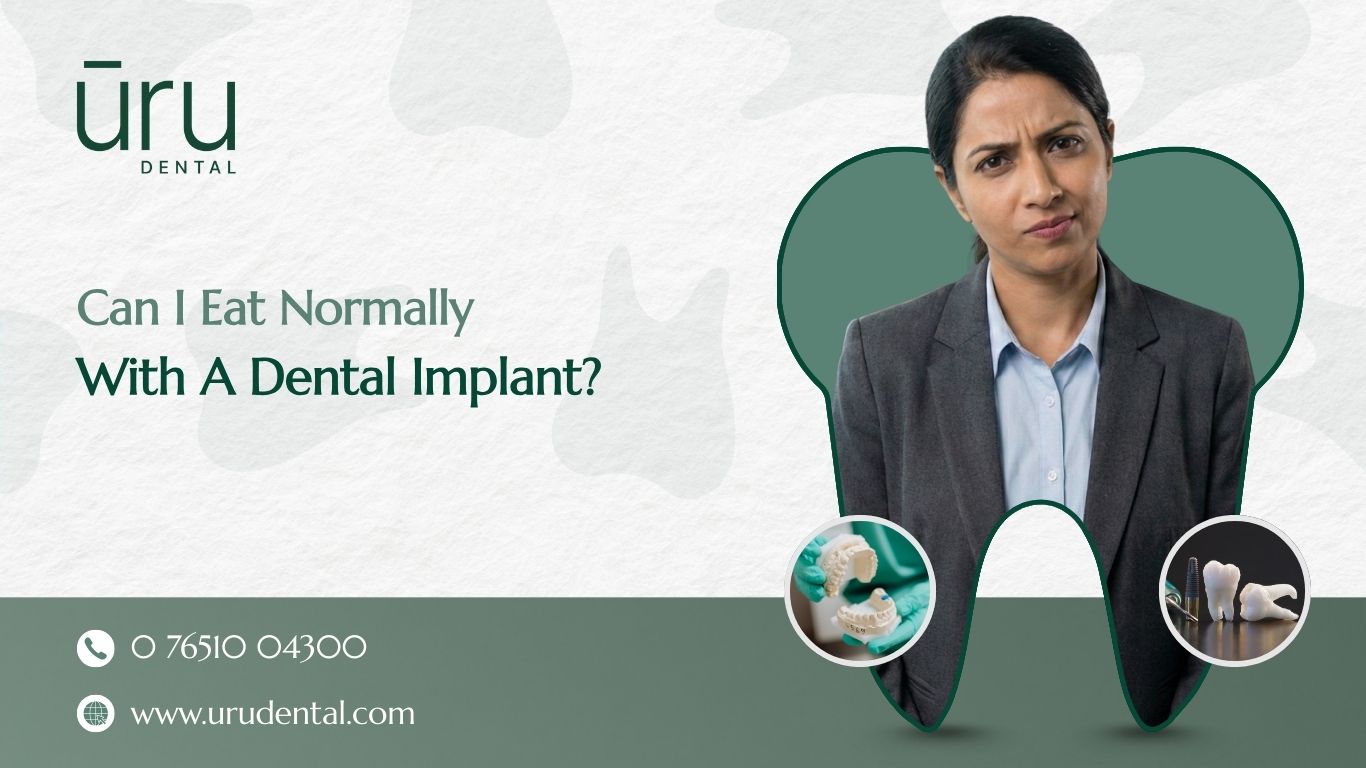
Imagine biting into your favorite dosa or taking the first crunchy bite of an apple, simple pleasures that should never feel out of reach. Many people share a similar story: they’ve spent years avoiding certain foods, chewing only on one side, or feeling anxious every time they sit down to eat. So, when the idea of replacing a missing tooth with an implant comes up, the biggest question they ask is: “Will I be able to eat normally again?”
Eating is not just a function; it’s comfort, confidence, and quality of life. Dental implants are designed to restore all three. If you are in Bengaluru, then visit Uru Dental Clinic for dental implants in HSR Layout. We will guide you on everything, like how eating feels with an implant, before placement, right after the procedure, during healing, and once the implant is fully integrated.
What Exactly Is a Dental Implant and Why Does It Matter for Eating?
Before discussing food, let’s talk about the foundation. A dental implant isn’t just a replacement “tooth.” It’s a small titanium post placed in the jawbone to serve as an artificial root. Once it fuses with the bone (a process called osseointegration), it becomes a stable base for a crown that looks and functions like a natural tooth.
Why this matters for chewing:
- Your bite force is nearly restored.
- The implant doesn’t slip or wobble like dentures.
- You can chew on both sides of your mouth again.
- Hard, crunchy, or chewy foods no longer feel intimidating.
At Uru Dental Clinic, we see patients regain confidence in their eating habits steadily after treatment. But it doesn’t happen overnight. There are stages, and each stage comes with its own food guidelines.
Eating Before, During, and After Implant Treatment: What to Expect
1. Before the Implant Procedure
If you’ve been living with a missing tooth, you already know your eating limitations, avoiding certain foods, discomfort when chewing, or food consistently getting stuck in the gap. Some patients depend entirely on the opposite side of the mouth, which overworks those teeth.
The implant is meant to restore normalcy, but after the placement, the mouth needs time to heal. That’s why we encourage patients to prepare mentally for a short transition period.
2. Eating Right After Implant Surgery (First 24–48 Hours)
This is the phase when most patients worry: "Will I starve on liquid food?"
No, you won’t. But your mouth needs rest.
At Uru Dental Clinic, we recommend:
Foods You Can Eat
- Smoothies (without seeds)
- Dal or light soups
- Curd or buttermilk
- Soft khichdi
- Well-mashed vegetables
- Protein shakes
Foods You Should Avoid
- Hot foods
- Spicy, acidic dishes
- Hard or crunchy items
- Chewy snacks
- Using a straw (it can dislodge the clot)
This phase usually lasts just a couple of days, and patients often find it very manageable.
3. Eating During the First Week
Your implant area is still healing, so soft, easy-to-chew foods are ideal.
Safe Options
- Soft rotis dipped in dal
- Idlis
- Upma
- Scrambled eggs
- Pasta
- Steamed fish
- Soft fruits like bananas or chikoo
This stage is all about comfort. You don’t want anything that demands heavy chewing or risks putting pressure on the implant site.
4. Eating from Week 2 to Month 3 (While the Implant Heals)
This is the longest stage. The implant is integrating with your jawbone, and this step determines the long-term success of your treatment.
You Can Slowly Reintroduce
- Rice
- Paneer dishes
- Mild curries
- Well-cooked vegetables
- Tender meats
- Softer snacks
Try to Avoid
- Nuts
- Hard chikki
- Crunchy pizzas
- Tough meats
- Ice cubes
- Popcorn
During this stage, patients sometimes forget there’s an implant because discomfort fades. But chewing on hard foods too early can delay healing. At Uru Dental Clinic, we usually give personalized diet timelines depending on bone density, healing speed, and how stable the implant feels.
5. Eating After the Implant Crown Is Placed (The “Back to Normal” Phase)
This is the moment most people wait for.
Once the crown is attached, usually after complete healing, you can return to normal eating patterns. Most patients describe this stage as “finally getting my tooth back.”
Foods You Can Comfortably Eat Again
- Apples
- Rotis and parathas
- Nuts
- Corn-on-the-cob
- Pizza
- Burgers
- Chips
- Chicken and meat
- Chocolates
- Anything you enjoyed before
A well-placed implant allows you to chew with nearly the same force as a natural tooth. The stability feels instinctive, and most patients forget which tooth is the implant within a few weeks.
So, Can You Eat Normally with a Dental Implant?
Yes, absolutely.
Once your implant is healed, eating feels natural again. You get back not just your bite strength, but the emotional comfort that comes with eating without fear or restrictions.
At Uru Dental Clinic, we emphasize that dental implants are not just for aesthetics, but they’re functional restorations designed to let you enjoy life fully.
Why Eating Feels Better with an Implant
1. Stability Similar to Natural Teeth
Since the implant integrates with your bone, the chewing experience is firm and reliable.
2. No Slipping or Shifting
Unlike removable options, implants stay fixed. You won’t feel insecure while eating out or chewing in front of others.
3. Even Bite Distribution
When a tooth is missing, the opposite side overworks. Implants restore balance, reducing strain on other teeth.
4. Improved Taste and Temperature Experience
Dentures cover the palate and dampen taste sensations. Implants don’t.
5. Long-Term Comfort
Once integrated, implants require no separate cleaning routines other than brushing, flossing, and checkups.
How Uru Dental Clinic Ensures a Smooth Eating Transition
Every patient heals differently, so eating guidelines are tailored individually. At Uru Dental Clinic, the process is personalized:
• Bone & gum assessment before treatment
Your chewing ability depends on how well the implant integrates, which is influenced by bone density and gum health.
• Gentle surgical techniques
Precise placement ensures minimal trauma and smoother recovery.
• A realistic food timeline
Not everyone heals at the same pace. We tell you exactly when you can advance your diet.
• Periodic reviews
We monitor how the implant site responds as you slowly return to normal food habits.
• Support even after crown placement
Some patients feel nervous biting into hard foods at first, we guide you patiently through this adjustment.
Maintaining Your Implant for Healthy, Confident Eating
Once you resume eating normally, implant care becomes crucial. Here’s what we recommend at Uru Dental Clinic for dental implants in HSR Layout:
- Brush twice daily
- Floss around the implant
- Use interdental brushes if plaque builds up
- Avoid biting very hard objects
- Visit for checkups twice a year
A clean implant is a healthy implant, and a healthy dental implant lasts.
Eating with a Dental Implant Is Meant to Feel Natural
Dental implants give you back more than a tooth. They give you freedom, the freedom to eat confidently, smile openly, and live without food-related anxiety.
If you’re considering dental implants, then look no further than Uru Dental Clinic for dental implants in HSR Layout.
When Your Smile Feels Natural, Eating Does Too
Dental implants gradually restore your ability to eat normally, first with softer foods, then with moderate items, and eventually with anything you like. With proper healing and guidance, your implant becomes part of your everyday life, just as natural teeth do.
At Uru Dental Clinic, we’re committed to helping you navigate every stage comfortably, so you can return to enjoying the foods you love without hesitation.